Mega Charizard X ex STANDARD PSA 10
Mega Charizard ex Mewtwo Part 2 · Japanese Print · Card #223
Mega Charizard X ex STANDARD PSA 10 Gem Mint · sells at $251 USD · Mega Charizard ex Mewtwo Part 2. Cert-verified slab, sourced from Japan, ships SF Express HK + DHL worldwide.
1 PSA 10 Slab Available
All slabs cert-verified. Payment held until we confirm your slab. SF Express 1-2 days (HK) · DHL Express 3-5 days international.
Japanese version
PrimaryCard Background & Set Context
Mega Charizard X originated in Pokemon X/Y (2013) as one of two Mega-evolution forms for Charizard alongside Mega Charizard Y, distinguished by its black scales, blue flame, and Dragon-type addition. The Mega-evolution mechanic was a defining feature of the X/Y era and was largely retired during the Sword/Shield generation, making its return through the m2/m2a sets a deliberate fan-service callback. Pokemon Card 'Mega Charizard ex Mewtwo Part 2' (m2a) was released as a continuation of the m2 set, doubling down on Mega Evolution and Charizard-Mewtwo as franchise-anchor characters. The ex mechanic in this set retains current-format competitive viability while leaning on legacy character recognition.
Investment Analysis
Mega Charizard X ex M2A-223 enters a market where Charizard-class chase cards consistently outperform set averages on both volume and price stability. Direct market price tracking is not yet established in our window. Structural drivers favor near-term retention: the Mega Charizard line carries a 10-year nostalgia premium dating from the X/Y mega-evolution introduction (2013-2014), the ex mechanic returns Charizard to competitive viability, and Japanese set chase cards in the SV era have shown roughly 18-30 month appreciation curves before secondary peaks. The standard-print version represents the play-grade entry point; collectors targeting PSA 10 should be aware that any same-card SAR / SR / Master Ball Mirror parallels (typical for SV-era ex cards) generally outperform the standard print on a per-grade basis. Buyers should also monitor whether Mega Charizard X appears in re-print products such as future high-class boxes or anniversary collections, as Charizard reprints historically compress secondary premiums by 15-25% within 6 months of release.
Risks to Watch
Primary risks include reprint risk through future high-class boxes that historically compress Charizard premiums, format-rotation risk affecting competitive demand component, JPY/USD/HKD foreign-exchange exposure for international buyers, and dilution risk as PSA grading population grows during the early-2026 grading cycle. Buyers should also weigh the inherent volatility of Charizard-class cards, which can experience 20-40% swings on news catalysts (anniversary announcements, anime tie-ins, new mega-evolution products).
Global Market Comparison
No sold-comp history yet for this card. Our price above reflects our own sourcing + margin; region benchmarks will populate as we ingest more data.
Price History (90 days)
Card Background & Set Context
Mega Charizard X originated in Pokemon X/Y (2013) as one of two Mega-evolution forms for Charizard alongside Mega Charizard Y, distinguished by its black scales, blue flame, and Dragon-type addition. The Mega-evolution mechanic was a defining feature of the X/Y era and was largely retired during the Sword/Shield generation, making its return through the m2/m2a sets a deliberate fan-service callback. Pokemon Card 'Mega Charizard ex Mewtwo Part 2' (m2a) was released as a continuation of the m2 set, doubling down on Mega Evolution and Charizard-Mewtwo as franchise-anchor characters. The ex mechanic in this set retains current-format competitive viability while leaning on legacy character recognition.
Investment Analysis
Mega Charizard X ex M2A-223 enters a market where Charizard-class chase cards consistently outperform set averages on both volume and price stability. Direct market price tracking is not yet established in our window. Structural drivers favor near-term retention: the Mega Charizard line carries a 10-year nostalgia premium dating from the X/Y mega-evolution introduction (2013-2014), the ex mechanic returns Charizard to competitive viability, and Japanese set chase cards in the SV era have shown roughly 18-30 month appreciation curves before secondary peaks. The standard-print version represents the play-grade entry point; collectors targeting PSA 10 should be aware that any same-card SAR / SR / Master Ball Mirror parallels (typical for SV-era ex cards) generally outperform the standard print on a per-grade basis. Buyers should also monitor whether Mega Charizard X appears in re-print products such as future high-class boxes or anniversary collections, as Charizard reprints historically compress secondary premiums by 15-25% within 6 months of release.
Japanese vs English & Variants
Within the m2a set, Mega Charizard X ex appears at minimum at standard print rarity and almost certainly at higher rarities (SAR / SR / Special Art Rare) — collector pursuit should focus on the higher-rarity parallels which carry the bulk of secondary-market premium. Compared to Mega Charizard Y ex variants and to base Charizard ex prints from earlier SV sets (e.g., Obsidian Flames Charizard ex), M2A-223 trades on Mega-evolution nostalgia plus current competitive relevance. Standard-print M2A-223 is generally sub-flagship in price terms but serves as the binder anchor for set completionists.
Authentication & Cert Verification
Authenticate M2A-223 by checking print quality on the Mega-evolution flame coloration (the Mega-X blue flame should have crisp gradient edges), verifying the holo-foil pattern matches the standard ex foil treatment for the m2a set, and inspecting the bottom-right card-number registration. Counterfeit markers for high-profile Charizard cards include slightly muted background colors, soft typeface edges on the attack name 'X' designation, and incorrect cardstock weight. Cross-reference TPCi press samples for the m2a set before transactions above standard pricing.
Risks to Watch
Primary risks include reprint risk through future high-class boxes that historically compress Charizard premiums, format-rotation risk affecting competitive demand component, JPY/USD/HKD foreign-exchange exposure for international buyers, and dilution risk as PSA grading population grows during the early-2026 grading cycle. Buyers should also weigh the inherent volatility of Charizard-class cards, which can experience 20-40% swings on news catalysts (anniversary announcements, anime tie-ins, new mega-evolution products).
Frequently Asked Questions
Background reading: general FAQ · how Poke10 sources · shipping & duties · all sets
What set is Mega Charizard X ex M2A-223 from?
Mega Charizard ex Mewtwo Part 2 (m2a), the SV-era continuation set focused on Mega-evolution returning to the TCG.
Is the standard print or the SAR more valuable?
SAR / SR / Special Art Rare parallels typically command meaningfully higher premiums than the standard print for Charizard-class ex cards.
Why does Mega Charizard X carry premium pricing?
Combination of 10-year nostalgia from X/Y era, current-format competitive viability through ex mechanic, and franchise-anchor character status.
What grade should I target for M2A-223?
PSA 10 is standard for premium Charizard-class cards. PSA 9 retains meaningful liquidity but typically trades at 30-45% of PSA 10.
What's the reprint risk for M2A-223?
Charizard cards historically face reprint risk in high-class boxes and anniversary products, which compress secondary premium by 15-25% within 6 months.
More from Mega Charizard ex Mewtwo Part 2
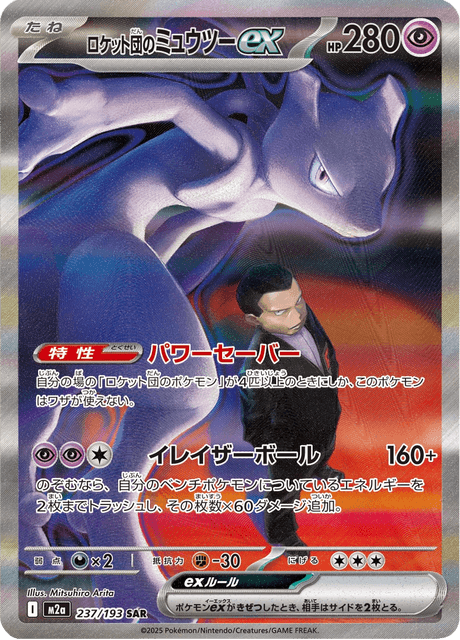
ロケット団のミュウツーex
m2a · #237 · Japanese
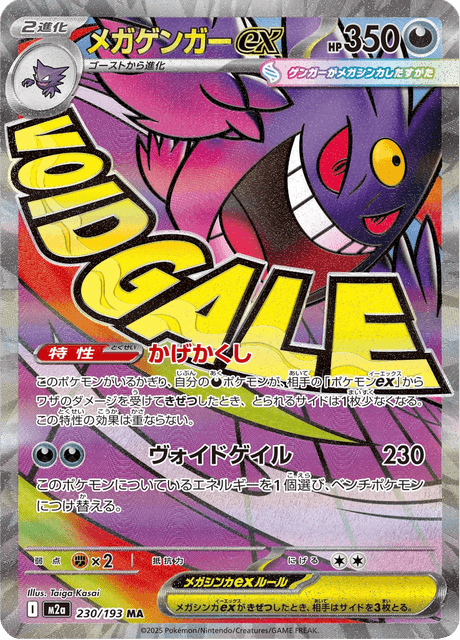
メガゲンガーex MA M2a MA
m2a · #230 · Japanese

コダック AR ex
m2a · #199 · Japanese
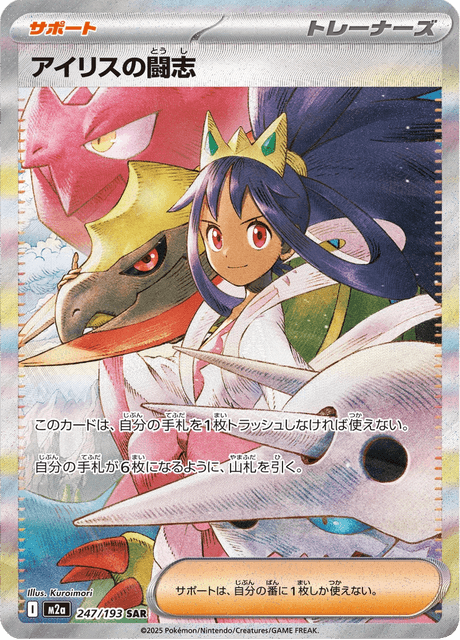
アイリスの闘志
m2a · #247 · Japanese
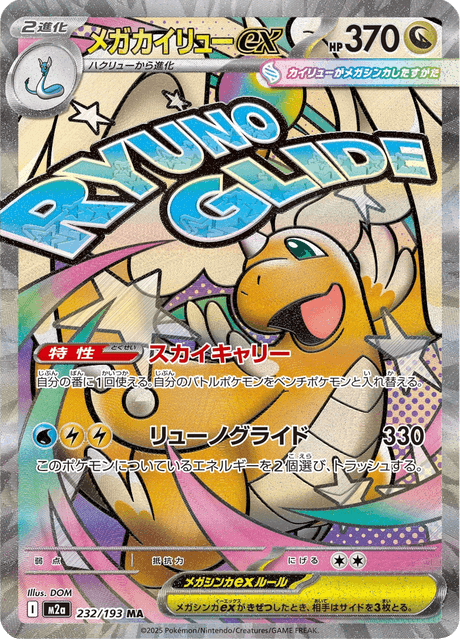
メガカイリューex (Mega Dragonite ex) MA 2025 POKEMON M2a JP
m2a · #232 · Japanese
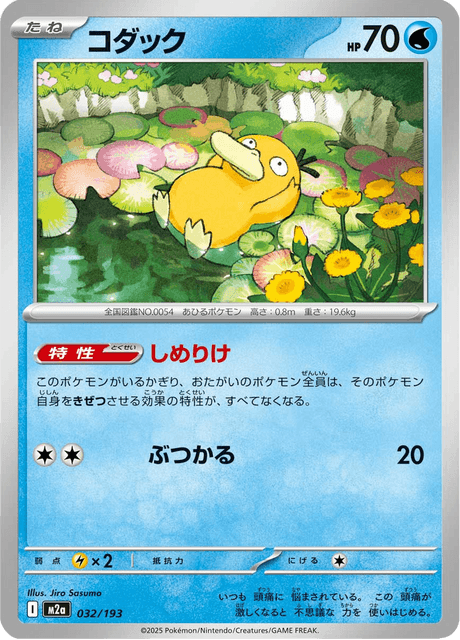
コダック ラブラブボール ミラー
m2a · #032 · Japanese
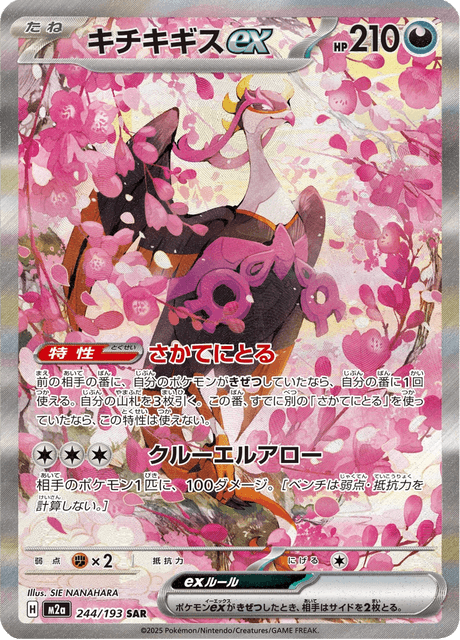
キチキギスex SAR M2a
m2a · #244 · Japanese
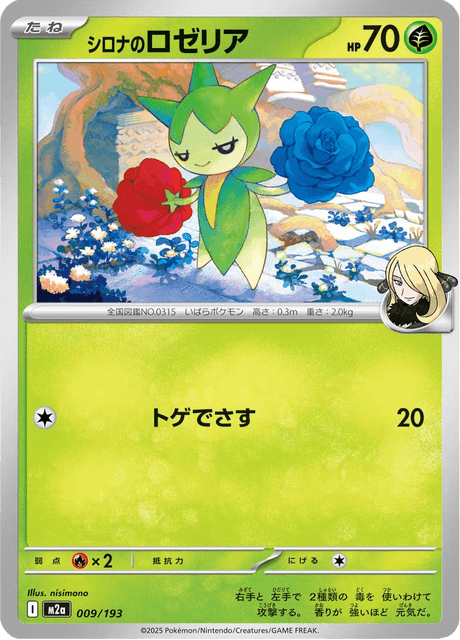
メガシビルドンex MA MEGA EXハイクラスパック ma
m2a · #009 · Japanese
Data Sources & References
- PSA grade & population: psacard.com/pop — authoritative PSA population report
- Japan market reference: snkrdunk.com
- US market reference: pricecharting.com
- Card image & metadata: Pokemon TCG API
Last updated: