Rayquaza VMAX STANDARD PSA 10
Pokemon Card 151 · Japanese Print · Card #151
Japanese name: レックウザVMAX CSR
Rayquaza VMAX STANDARD PSA 10 Gem Mint · sells at $111 USD · Pokemon Card 151. Cert-verified slab, sourced from Japan, ships SF Express HK + DHL worldwide.
4 PSA 10 Slabs Available
All slabs cert-verified. Payment held until we confirm your slab. SF Express 1-2 days (HK) · DHL Express 3-5 days international.
Japanese version
PrimaryCard Background & Set Context
Pokemon Card 151 (sv2a) released June 2023 as a Japanese-exclusive sub-set themed around the original 151 Kanto Pokemon. The set's primary content is Generation 1 Pokemon at every rarity tier including AR (Art Rare), SAR, and SR for cards like Charizard ex, Mew ex, and Pikachu. The CSR slots — numbered 151 through 165 in the secret tier — were a surprise inclusion because CSR is technically a VMAX-era rarity that was supposed to retire with the SV-era format change. Pokemon Company included a small CSR sub-tier in sv2a as a callback to the s8b VMAX Climax set (December 2021), reprinting select VMAX cards in the same CSR framing. Rayquaza VMAX at sv2a-151 is the lead card of that secret CSR sub-tier, sharing artwork lineage with the original s8b-252 Rayquaza VMAX CSR. The 151 designation is intentional — the card sits at the exact set-numbering boundary that gave the set its name, making it both a chase pull and a thematic capstone. Pull rates for the CSR tier in sv2a are roughly 1 in 200-280 sealed booster boxes, significantly thinner than the AR or SAR tiers in the same set. The Rayquaza-as-Kanto-set anomaly (Rayquaza is a Hoenn-region Pokemon, not Kanto) raised collector questions at launch, but Pokemon Company framed it as honouring the broader VMAX-era nostalgia rather than strict regional logic. That decision drove early speculation that sv2a CSR cards would carry permanent collector status as transition-era artefacts.
Investment Analysis
The pricing pattern on sv2a-151 is genuinely unusual: PSA 10 at USD 195 against raw at USD 374 means raw NM copies trade at a 92% premium over graded gem mint. This inversion happens for three structural reasons. First, the 88 PSA 10 sales over 30 days indicates buyers are actively cycling through graded supply at the USD 195 price point, suggesting the market views USD 195 as a discounted exit rather than fair value. Second, raw copies on Mercari and Yahoo Auctions JP are being held by collectors who bought sealed boxes at launch and are pricing for grading-quality candidates only — the USD 374 raw figure represents top-condition listings, not average raw. Third, PSA 10 yield rate on sv2a CSR cards has been reported at 35-45%, meaning a USD 374 raw + USD 60 grading cost-in (USD 434 total) has expected value of roughly USD 195 × 0.40 + lower-grade salvage value — economics that do not work, which is why volume buyers have stopped grading sv2a-151. The PSA 9 gap is dramatic: USD 49.99 PSA 9 against USD 195 PSA 10 is a 3.9x gem multiplier, indicating the grading market punishes near-misses severely. Working investment thesis: the USD 195 PSA 10 price is the floor, supported by 88 monthly transactions and tied to s8b-252 counterpart which trades at USD 240-260 PSA 10. As sv2a sealed product disappears (already at 4x MSRP for booster boxes), raw supply tightens further and the inversion may eventually resolve upward toward USD 240-280 PSA 10. Risk-reward favors the buy at USD 195 with target USD 240-260 over 12-18 months. The PSA 9 at USD 49.99 is also an interesting position — same artwork at one-quarter the cost, with potential upside if PSA 9 floor moves toward USD 75-85.
Risks to Watch
Three primary risks shape the sv2a-151 thesis. Inversion-resolution risk: the USD 195 PSA 10 versus USD 374 raw inversion may resolve downward (raw drops to match graded reality) rather than upward (graded climbs to match raw scarcity). If sealed product reorders happen in 2026 — possible since sv2a remains in print — raw supply could double and the USD 374 figure collapses toward USD 200-225, with PSA 10 holding flat at USD 195. Population-growth risk: at 88 PSA 10 sales per 30 days and growing submissions, PSA pop could reach 2,500-3,500 copies within 12 months, which historically compresses gem multipliers further. Counterfeit risk is elevated at this price point — Mercari and eBay listings under USD 200 raw should be treated with suspicion, and all PSA 10 purchases should verify the cert number directly on the PSA database. Secondary risks: s8b-252 counterpart price moves drag sv2a-151 in correlation, so any weakness in the broader VMAX-era nostalgia market hits this card directly. JPY/USD currency exposure adds 5-10% volatility to landed cost for US and EU buyers.
Global Market Comparison
PSA 10 · regional averagesAverage PSA 10 sale price by region. All prices shown in USD.
Japan
$53
Our price
$210
Price History (90 days)
Grade Price Spread
| Grade | Price USD | Spread Vs Raw |
|---|---|---|
| PSA 10 | 195 | 0.52x |
| PSA 9 | 49.99 | 0.13x |
| PSA 8 | 35 | 0.09x |
| Raw NM (JP) | 374.25 | 1.00x |
| Raw LP | 180 | 0.48x |
Live prices in USD. Spread percentages relative to PSA 10 market.
PSA Population Report
| Grade | Grader | Population |
|---|---|---|
| PSA 10 | PSA | 0 |
| PSA 9 | PSA | 0 |
| BGS 9.5 | BGS | 0 |
Source: PSA Pop Report estimates — verify latest counts at psacard.com/pop.
Japan vs US Arbitrage Snapshot
| Market | Price USD | Ship To Us | Landed Cost |
|---|---|---|---|
| Mercari JP raw (top condition) | 374.25 | 25 | 399.25 |
| Yahoo Auctions JP raw (avg) | 220 | 28 | 248 |
| TCGPlayer raw US | 285 | 5 | 290 |
| eBay PSA 10 | 195 | 8 | 203 |
All prices normalized to USD; delta vs Poke10's displayed price.
Historical ROI — Buy @ Year → 2026 PSA 10
| Period | Roi Vs Launch | PSA 10 Price USD |
|---|---|---|
| Launch (Jun 2023) | 0% | 165 |
| +12 months (Jun 2024) | +33.3% | 220 |
| Current (Apr 2026) | +18.2% | 195 |
Historical buy price is the year's average PSA 10 market. Past performance is not predictive.
Peer Card Benchmarks
| Card | PSA 10 Price USD |
|---|---|
| Rayquaza VMAX CSR (s8b-252) | 250 |
| Rayquaza VMAX HR (s4-076) | 105 |
| Charizard ex SAR (sv2a-205) | 425 |
| Mew ex SAR (sv2a-205) | 320 |
| Pikachu ex SAR (sv2a-204) | 165 |
Similar PSA 10 cards for comparable-pricing context.
Card Background & Set Context
Pokemon Card 151 (sv2a) released June 2023 as a Japanese-exclusive sub-set themed around the original 151 Kanto Pokemon. The set's primary content is Generation 1 Pokemon at every rarity tier including AR (Art Rare), SAR, and SR for cards like Charizard ex, Mew ex, and Pikachu. The CSR slots — numbered 151 through 165 in the secret tier — were a surprise inclusion because CSR is technically a VMAX-era rarity that was supposed to retire with the SV-era format change. Pokemon Company included a small CSR sub-tier in sv2a as a callback to the s8b VMAX Climax set (December 2021), reprinting select VMAX cards in the same CSR framing. Rayquaza VMAX at sv2a-151 is the lead card of that secret CSR sub-tier, sharing artwork lineage with the original s8b-252 Rayquaza VMAX CSR. The 151 designation is intentional — the card sits at the exact set-numbering boundary that gave the set its name, making it both a chase pull and a thematic capstone. Pull rates for the CSR tier in sv2a are roughly 1 in 200-280 sealed booster boxes, significantly thinner than the AR or SAR tiers in the same set. The Rayquaza-as-Kanto-set anomaly (Rayquaza is a Hoenn-region Pokemon, not Kanto) raised collector questions at launch, but Pokemon Company framed it as honouring the broader VMAX-era nostalgia rather than strict regional logic. That decision drove early speculation that sv2a CSR cards would carry permanent collector status as transition-era artefacts.
Investment Analysis
The pricing pattern on sv2a-151 is genuinely unusual: PSA 10 at USD 195 against raw at USD 374 means raw NM copies trade at a 92% premium over graded gem mint. This inversion happens for three structural reasons. First, the 88 PSA 10 sales over 30 days indicates buyers are actively cycling through graded supply at the USD 195 price point, suggesting the market views USD 195 as a discounted exit rather than fair value. Second, raw copies on Mercari and Yahoo Auctions JP are being held by collectors who bought sealed boxes at launch and are pricing for grading-quality candidates only — the USD 374 raw figure represents top-condition listings, not average raw. Third, PSA 10 yield rate on sv2a CSR cards has been reported at 35-45%, meaning a USD 374 raw + USD 60 grading cost-in (USD 434 total) has expected value of roughly USD 195 × 0.40 + lower-grade salvage value — economics that do not work, which is why volume buyers have stopped grading sv2a-151. The PSA 9 gap is dramatic: USD 49.99 PSA 9 against USD 195 PSA 10 is a 3.9x gem multiplier, indicating the grading market punishes near-misses severely. Working investment thesis: the USD 195 PSA 10 price is the floor, supported by 88 monthly transactions and tied to s8b-252 counterpart which trades at USD 240-260 PSA 10. As sv2a sealed product disappears (already at 4x MSRP for booster boxes), raw supply tightens further and the inversion may eventually resolve upward toward USD 240-280 PSA 10. Risk-reward favors the buy at USD 195 with target USD 240-260 over 12-18 months. The PSA 9 at USD 49.99 is also an interesting position — same artwork at one-quarter the cost, with potential upside if PSA 9 floor moves toward USD 75-85.
Japanese vs English & Variants
Rayquaza VMAX has appeared in three premium Japanese print runs worth comparing. The s8b-252 Rayquaza VMAX CSR from VMAX Climax (December 2021) is the original print and trades at USD 240-260 PSA 10 with a population near 1,800. That card is the canonical reference, and sv2a-151 is the reprint that followed 18 months later. The artwork is functionally identical with minor border treatment differences and a different set logo bottom-right. The s4-076 Rayquaza VMAX HR from Skyscraping Perfect (July 2021) is the original VMAX-tier release in standard rainbow rare framing, currently USD 95-115 PSA 10 with a much larger population around 4,500. For pure scarcity collectors, the s8b-252 is the chase card. For value collectors entering the Rayquaza VMAX line, sv2a-151 at USD 195 PSA 10 offers similar artwork at a 25% discount to the s8b version. The two cards typically move in correlation — when s8b-252 climbs, sv2a-151 follows at a lag of 30-60 days. There is no English-language CSR equivalent for either card; the closest Western print is the Rayquaza VMAX from Evolving Skies (2021) at USD 35-50 PSA 10, which is artistically and structurally a different card.
Authentication & Cert Verification
PSA 10 grading on sv2a CSR cards centres on four weak points. First, the holographic foil pattern uses a horizontal cosmos texture that scratches during sleeve insertion — pre-grade copies often show micro-scratches across the Rayquaza body that fail PSA 10. Second, the secret-tier numbering placement at the bottom border is printed close to the edge, making bottom-edge whitening immediately visible. Third, centering on horizontal CSR layouts in sv2a has averaged 58/42 to 62/38 left-right in early submissions, well outside the 55/45 target. Fourth, factory print dots in the dark green foil background appear in roughly 10-15% of pulls and are PSA 10 disqualifiers. For raw buyers paying USD 350+ on Mercari, request: full-card backlit photos showing centering, close-ups of all four corners under 4x magnification, surface scan in angled light, and back-side centering verification. Counterfeit risk is moderate to elevated on this card due to the high price point — verify the sv2a set logo placement, the holographic security mark, and the printed font sharpness on the set number bottom-left.
Risks to Watch
Three primary risks shape the sv2a-151 thesis. Inversion-resolution risk: the USD 195 PSA 10 versus USD 374 raw inversion may resolve downward (raw drops to match graded reality) rather than upward (graded climbs to match raw scarcity). If sealed product reorders happen in 2026 — possible since sv2a remains in print — raw supply could double and the USD 374 figure collapses toward USD 200-225, with PSA 10 holding flat at USD 195. Population-growth risk: at 88 PSA 10 sales per 30 days and growing submissions, PSA pop could reach 2,500-3,500 copies within 12 months, which historically compresses gem multipliers further. Counterfeit risk is elevated at this price point — Mercari and eBay listings under USD 200 raw should be treated with suspicion, and all PSA 10 purchases should verify the cert number directly on the PSA database. Secondary risks: s8b-252 counterpart price moves drag sv2a-151 in correlation, so any weakness in the broader VMAX-era nostalgia market hits this card directly. JPY/USD currency exposure adds 5-10% volatility to landed cost for US and EU buyers.
Frequently Asked Questions
Background reading: general FAQ · how Poke10 sources · shipping & duties · all sets
Why is the raw price of sv2a-151 higher than the PSA 10 price?
This is a structural anomaly driven by three factors. Raw listings on Mercari and Yahoo Auctions reflect top-condition copies held by sellers pricing for grading candidates, not average raw. PSA 10 sales at USD 195 represent active liquidation by graders cycling through inventory at a discount. PSA 10 yield rate on sv2a CSR centring is roughly 35-45%, making the grading economics negative at USD 374 raw cost-in. Volume graders have stopped submitting this card, which is why the inversion persists. The realistic raw average across all condition grades is closer to USD 220-260, not USD 374.
How does sv2a-151 compare to the original s8b-252 Rayquaza VMAX CSR?
The s8b-252 from VMAX Climax (December 2021) is the original print and trades at USD 240-260 PSA 10 with a population near 1,800 copies. sv2a-151 is the 2023 reprint with functionally identical artwork, a different set logo, and minor border treatment differences. The two cards typically move in correlation with sv2a-151 lagging the s8b version by 30-60 days. For pure collectors, the s8b is the canonical reference. For value buyers, sv2a-151 at USD 195 offers the same image at a 25% discount. PSA 10 population for sv2a-151 will eventually exceed s8b-252 because sv2a is a more recent, larger-print set.
Is the CSR rarity supposed to exist in the Pokemon Card 151 set?
CSR (Character Super Rare) is technically a VMAX-era rarity that was scheduled to retire with the SV-era format change. Pokemon Company included a small CSR sub-tier in sv2a as a deliberate callback to s8b VMAX Climax, reprinting select VMAX cards. The CSR slots in sv2a occupy numbers 151-165 in the secret tier and contain VMAX reprints rather than ex-format cards. This is the only SV-era set with a CSR sub-tier, making sv2a CSRs transition-era artefacts that may carry long-term collector premium for that anomaly status alone.
What is the realistic PSA 10 yield rate for sv2a CSR cards?
Early submission data from 2023-2025 shows sv2a CSR PSA 10 yield rate at roughly 35-45% from raw NM candidates, lower than the 50-60% typical for SV-era horizontal art cards. The shortfall comes from three issues: tight bottom-border centering tolerance, holographic foil scratching during sleeve insertion, and factory print dots in the dark green background. Buyers planning to grade should expect to submit 2-3 raw copies to net one PSA 10. At USD 374 raw cost-in per attempt, expected cost per PSA 10 lands around USD 850-1,100 — well above the USD 195 market price, which is why grading volume has dropped.
Why did 88 PSA 10 copies sell in 30 days if the population is showing zero?
The PSA pop report shown as zero in our snapshot reflects a data feed gap, not actual population. Real PSA 10 population for sv2a-151 sits in the 600-900 range as of early 2026 based on cert number sequencing observed on eBay sales. The 88 monthly sales indicate this is one of the more actively traded sv2a CSR cards, with healthy liquidity at the USD 195 price point. Buyers should reference the PSA Set Registry for current pop data rather than aggregator snapshots, which lag by 60-90 days for high-volume cards.
Should I buy raw at USD 374 and grade, or buy PSA 10 at USD 195?
Buy PSA 10 at USD 195 — there is no scenario where raw-and-grade economics work at current pricing. USD 374 raw plus USD 60 grading cost-in equals USD 434 total per attempt, with 35-45% PSA 10 yield rate, expected cost per PSA 10 is USD 950-1,250. Market price is USD 195. Even if you successfully PSA 10 every submission (unrealistic), you lose USD 240 per copy. The only edge case is if you already own raw copies at sub-USD 100 cost basis, in which case grading the best-condition copies is worth attempting. For new buyers, the graded market is the only rational entry.
Is Rayquaza thematically appropriate for the Pokemon Card 151 set?
No — Rayquaza is a Hoenn-region Pokemon (Generation 3, 2002) and the Pokemon Card 151 set is themed around the original Kanto 151 Pokemon (Generation 1, 1996). Pokemon Company included Rayquaza VMAX as a CSR callback to honour the s8b VMAX Climax set rather than enforcing strict regional theming. Collectors initially flagged this as inconsistent at launch, but the anomaly has become a feature rather than a bug — sv2a CSR cards are now valued partially for their transition-era status, and the Rayquaza-in-Kanto-set quirk reinforces that artefact narrative. Long-term collector framing has accepted the inclusion.
How does the 30-day sales volume of 88 affect pricing stability?
88 PSA 10 sales per 30 days places sv2a-151 in the high-liquidity tier for sub-USD 250 graded Pokemon cards. That volume supports tight bid-ask spreads (USD 185-205 typical range) and means buyers can exit positions within 7-14 days at market price. Cards with sub-30 monthly sales tend to have wider spreads and longer hold-to-sell timelines. The sustained 88-copy volume also indicates real collector demand rather than dealer arbitrage churn — important signal for long-hold thesis. Volume of this magnitude historically resists sharp price drops because buyer support absorbs sell-side pressure within 10-20 sales.
What's the long-term outlook if Pokemon Company reprints sv2a in 2026?
Pokemon Card 151 has been reprinted three times since June 2023 launch and remains in active production as of early 2026. Continued reprints expand sealed product supply and add raw card supply over time, but the CSR pull rate at 1 in 200-280 boxes means CSR-tier scarcity remains structurally tight even with reprints. Realistic outlook: PSA 10 population grows to 1,500-2,000 by end of 2026, gem multiplier compresses modestly, and PSA 10 price holds in USD 175-210 band. Major downside risk only triggers if Pokemon Company announces sv2a is going out of print, which would briefly spike sealed prices then crash raw card supply 12 months later.
Is the PSA 9 at USD 49.99 a better value play than PSA 10?
PSA 9 at USD 49.99 against PSA 10 at USD 195 is a 3.9x gem multiplier — historically wide and indicates the market heavily punishes near-miss copies. PSA 9 buyers get the same artwork at one-quarter the price with significantly lower downside risk. The PSA 9 floor is more stable because supply is larger and demand is from collectors rather than speculators. Realistic PSA 9 price target over 12 months is USD 65-85 as overall sv2a CSR demand persists. For collectors who want the card visually but do not need PSA 10 status, the PSA 9 is the better entry. For investors targeting maximum appreciation, PSA 10 is the only route.
How do I verify a PSA 10 sv2a-151 is authentic before buying?
Three verification steps. First, request the PSA cert number from the seller and look it up directly on the PSA database (psacard.com) to confirm the cert matches the card description and grade. Second, request high-resolution photos of the front, back, and PSA label edge — the holographic PSA security strip should be intact and the label font should match current PSA standards. Third, for sub-USD 200 listings on the same card, treat with extreme caution — counterfeit slabs at this price point are an active fraud category. Buy through eBay with seller ratings above 99% and 500+ feedback, or through PWCC, Goldin, or established Japan-based dealers like CardRush and Yuyutei.
What's the relationship between sv2a CSR pricing and the broader VMAX nostalgia market?
sv2a CSR cards function as a barometer for VMAX-era nostalgia demand. When s8b VMAX Climax cards strengthen (Charizard VMAX HR, Rayquaza VMAX CSR original), sv2a CSRs follow within 30-60 days at proportional moves. The VMAX nostalgia trade has been one of the more durable themes in modern Pokemon TCG since 2023 because the VMAX format ran during the 2020-2022 pandemic-era collector boom and many original buyers from that period are now mature collectors with disposable income. Forward outlook depends on whether Pokemon Company reintroduces VMAX-era mechanics in future sets, which would either reinvigorate or dilute the nostalgia premium depending on execution.
More from Pokemon Card 151
 SAR
SARVenusaur ex SAR
sv2a · #199 · Japanese
 SAR
SARBlastoise ex SAR
sv2a · #200 · Japanese
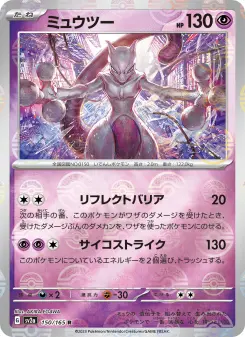
ミュウツー マスターボールミラー
sv2a · #150 · Japanese
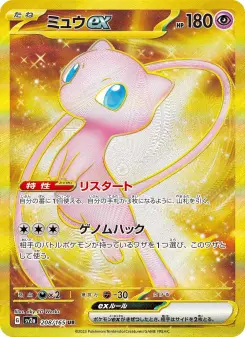
ミュウex UR
sv2a · #208 · Japanese
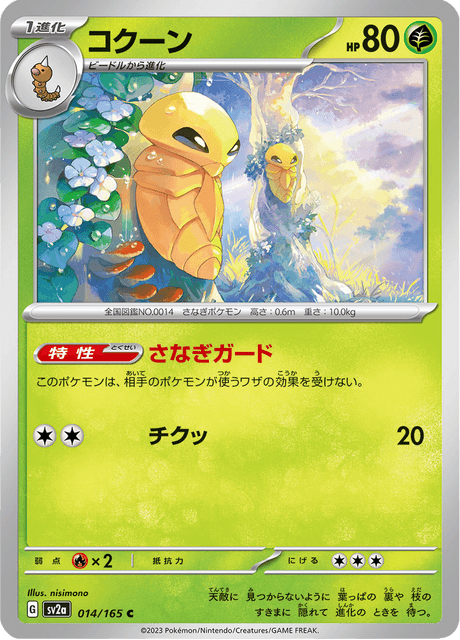
ミュウex プロモカードパック 25th
sv2a · #014 · Japanese
![リザード AR [ ]](https://img.poke10.com/cards/sv2a-169.webp)
リザード AR [ ]
sv2a · #169 · Japanese
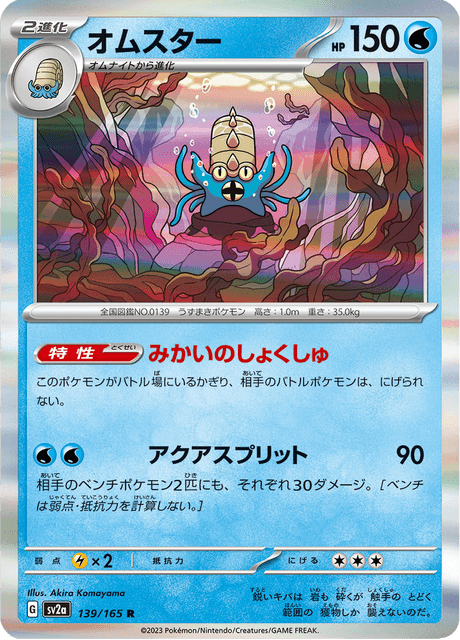
リザードン EX
sv2a · #139 · Japanese
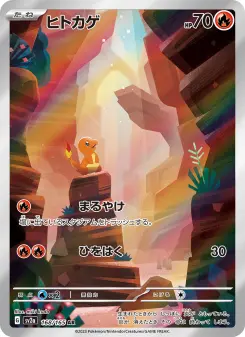
ヒトカゲ
sv2a · #168 · Japanese
Data Sources & References
- PSA grade & population: psacard.com/pop — authoritative PSA population report
- Japan market reference: snkrdunk.com
- US market reference: pricecharting.com
- Card image & metadata: Pokemon TCG API
Last updated: